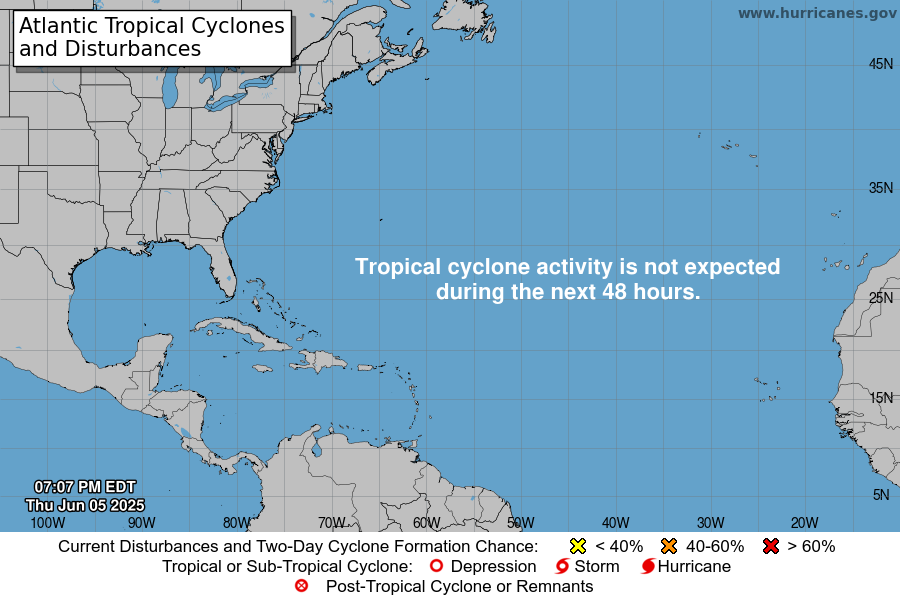
Hurricane Alex Forms in Atlantic, Earliest Since 1938

Hurricane Alex formed in the Northeastern Atlantic today, and is set to impact the Azores Islands overnight into tomorrow.  Hurricane Alex has sustained winds of 85 MPH and is churning due north at 22 MPH.  After impacting the Azores, Alex will become a post-tropical cyclone as it moves to the northwest rapidly.  Alex will end up, most likely as a post-tropical storm or remnant low, near the Northeastern Canadian Maritime or around southern portions of the Greenland Maritime.
US Snow Update: Across the Northeast, more nor’easters can be expected, especially in early to late February, when cold air may mix in to create significant snow events.  In other locations across the United States, more of the same is to be expected in the short term, but there is the potential for a small snow event in and around southern Oklahoma/ northern Texas over the weekend, according to the GFS, the CMC, and the ECMWF computer models.


HURRICANE PATRICIA IS THE STRONGEST STORM EVER RECORDED IN THE WESTERN HEMISPHERE

8:00 AM AST 10/23/15: HURRICANE PATRICIA NOW HAS SUSTAINED WINDS OF 210 MPH and a pressure hovering just below 880 millibars as it begins to make landfall on the Central-Pacific Mexican Coastline.

This storm is the third strongest hurricane ever recorded worldwide at the moment and is close to second, with this storm making landfall at its peak, mass destruction can be expected, a storm surge of over 20 feet and winds over 200 MPH with gusts over 250 MPH can also be expected.   For anyone who may reside in these areas, if you have not evacuated already, NOW is the time to do so. For those with interests in these areas around Manzillo, Mexico, please continue to monitor the progress of this storm.

We will continue to update on this catastrophic event.

As Atlantic Hurricane Season Winds Down, Western Mexico Faces Major Hurricane Threat

10/22/15 8:00 PM AST: Hurricane Patricia strengthens rapidly to a Category 4 hurricane, Hurricane Warnings in place.

Although the Atlantic Hurricane Season is winding down, a massive Category 4 Hurricane Patricia is quickly moving towards the Central Mexican Pacific coastline.  This monster storm will also help bring massive amounts of rainfall to these areas along with parts of the Southern United States over the next several days.

The Forecast

At this time yesterday, Hurricane Patricia was only a Tropical Depression with sustained winds of only 35 MPH, and the forecast track was only suggesting the landfall at a maximum of a Category Two storm on the Mexican Coastline.  So what happened?

Well, since yesterday at this time, the forecast models have shifted as to support massive quick development of the storm due to warm ocean waters, and minimal wind shear.  Even though the official forecast track yesterday called for a moderate hurricane impact on the Mexican Coastline, some computer models such as the HWRF and the GFDL (Hurricane Computer Models) suggested that at least a potential Category Three storm impact was possible starting late on Tuesday.  These same computer models have steadily suggested a more violent impact since then.

For anyone with interests across along the Central-Pacific Mexican Coastline, please continue to monitor the storm and visit the NHC’s website for more information.

Joaquin Expected to Impact Bermuda, Watches and Warnings Issued

Weather Bulletin – 10/3/2015 2 PM AST

The National Hurricane Center in Miami Florida has issued a Tropical Storm Warning and a Hurricane Watch for the Islands of Bermuda.  The strong Category Four Hurricane Joaquin is now moving quickly to the northeast towards Bermuda.  Joaquin’s center is expected to pass within 75 miles to the west of Bermuda in about two days, as a potentially high Category Two, or low-grade Category Three storm.  Due to Joaquin’s potential proximity to the island nation, the  NHC urges residents to take precautions immediately and to be prepared for the worst.

We’ll keep you posted – Weather 360

Hurricane Joaquin is a Category Four Storm, Track Uncertainty Remains

As of October 1 2015 12:00 PM Atlantic Standard Time (EDT)

Hurricane Hunter Aircraft flying at low altitudes has recovered wind speeds upwards of 115 Knots (About 130 MPH), and the storm now has a Mean Sea-level Pressure (MSLP) of 939 millibars. Joaquin is still moving southwest into The Bahamas, but is expected to reach the Jet Stream shortly and begin its turn to the north.  At this moment, one on a satellite image may view this change in direction, as it has just begun.  As this has just begun, the storm is still moving to the west, so the storm will likely stay on the slightly westward side of the current NHC Track Cone issued at the 11 AM 15 Advisory Update.  At the moment many of the computer models seem to be incorrect in saying it would temporarily stall out in The Bahamas and sling-shotting to the northeast, for the storm has started to move slightly to the northwest.

Locations across the East Coast that need to be on alert are: North Carolina, Virginia, Maryland, Delaware, New Jersey, New York, Connecticut, Rhode Island, and Maine.

More updates soon here on Weather360.

For emergency information, consult the NHC at http://www.nhc.noaa.gov

TROPICAL STORM JOAQUIN TO STRENGTHEN AND IMPACT THE EAST COAST

Overnight:  Hurricane Warnings and Watches has been issued for The Bahamas, as Tropical Storm Joaquin is expected to strengthen to a hurricane shortly and impact The Bahamas over the next two to three days.  The NHC track has also shifted to the west, with a track that has Hurricane Joaquin impacting The East Coast anywhere from New Jersey to Rhode Island this coming Monday or Tuesday.

Everyone from Virginia to Rhode Island should continue to monitor this storm and be prepared for every scenario for your area.  Now is the time to make sure you have what you need in the event a hurricane impacts you.

The Models:

The current most popular trend with some of the more major, long range computer models, all try to bring this storm into  locations just south of Delaware, but other major computer models such as the ECMWF and the TVCN (The most popular among the NHC) suggest a more easterly track, which will likely shift the current general trend back up to the north and east once more, but yet again, we can not predict this with 100% accuracy, for this storm has been rapidly strengthening so much, every single computer model seems to shift in every which direction  every model run…

We’ll continue to monitor the storm for you – Weather360 9/30/15

Tropical Storm Joaquin Expected to Strengthen and May Impact East Coast

Over the past several computer model runs, Tropical Storm Joaquin has been shown to become a large, violent hurricane and impact the East Coast, potentially anywhere from Virginia to Massachusetts.  Although there is a ‘general’ trend that shows the storm turn into the US East Coast, there are major differences in exact strength and location.

ECMWF VS GFS:

The 12z run of the ECMWF and the 18z run of the GFS have some very major differences.  For instance, the ECMWF shows a large and violent storm off of the coast of Florida, that quickly turns away out to sea and fizzles out over the open Atlantic.  The GFS shows a less strong storm developing near The Bahamas over the next several days and moving up the coast to impact mostly Virginia, Maryland, and Delaware initially, before moving up as a weaker system towards the rest of the Northeast.

At the moment though, it seems no matter what situation occurs, more than 10 inches of rain is likely to fall across the Northeast before next Wednesday.

We’ll continue to keep an eye on this system as its track becomes more and more clear.

Soon-To-Be Tropical Storm Joaquin Expected to Impact Northeast This Weekend

Over the past two days, Weather 360 has been monitoring the development of newly formed Tropical Depression Eleven (soon to be Tropical Storm Joaquin.)  Over the past 24 hours though, somewhat ludicrous information has been streaming out from many of the well regarded computer models.  This information includes that of a named Tropical Storm or potentially Hurricane, impacting the New England Coastline later this week and into the weekend.

The Stats:

Tropical Depression Eleven is currently moving west at 5 MPH, and is expected to make a sharp northerly turn over the next 48 hours towards the East Coast.  The current pressure is already 1003 Millibars, well ahead of the expected pressure and has sustained winds of 35 MPH with surface gusts reaching upwards of 40 MPH.  The storm is located north and east of The Bahamas and may threaten the following locations with Tropical Storm force or above winds:  Bermuda, New Jersey, New York, Connecticut, Rhode Island, Massachussetts, and potentially New Hampshire, and Maine.

The Computer Models:

At the moment, many of the different computer models are suggesting pretty much what the NHC track as of 5:00 PM EDT/AST suggests, a sharp turn to the north and potentially a re-curve to the west straight into locations such as New York, Connecticut, and New Jersey.

Please consult the National Hurricane Center and your emergency management office over the next few days as this becomes more and more certain to make your plan.

Remnants of Erika may redevelop, Tropical Storm Fred forms, Hurricane Ignacio may impact Hawaii

End of August Weather Overview: 2 PM EDT/AST, 8 AM HST August 30th 2015

Erika Redevelopment Recap

Over the past several days the weather world has been keeping a close eye on Erika, just about until yesterday, when it became a remnant low off the northern coast of Cuba.  After that point at 9:30 yesterday, almost all hope was lost for the redevelopment of Erika, but according to some short range computer models, the remnants moving northward across Central Florida, may redevelop a center of circulation soon off the Southeastern Coast.  So we’ll keep a close watch on this system over the upcoming several days.

Tropical Storm Fred Overview

Tropical Storm Fred formed yesterday off the coast of the Cape Verde Islands and is expected to become a hurricane while moving further northwest towards the central Atlantic.  Fred will thereafter weaken to a Tropical Storm once more and move quite quickly through the central Atlantic, the eventual destination is still at this point unknown.

Hawaii Hurricane Threat

Hurricane Ignacio is now a Category Four storm with winds upwards of 140 MPH, this storm is barreling to the northwest and is expected to graze the northern sides of the islands of Maui and the Big Island.  At the moment, Tropical Storm Watches are in effect for locations within The Big Island and all of Maui County.  For those with interests in the islands potentially affected by the storm, please continue to monitor the progress of this storm over the upcoming few days.

Weather 360 will continue to keep you updated on all of these threats over the coming days.

Tonight crucial in any future development of Tropical Storm Erika

As of 5:30 PM EDT/AST

With the newest NHC track and intensity update of Tropical Storm Erika rolling out, it is time to really stop and think, what is the single most important factor in Erika’s development, what is most crucial in the short term?  The answer is for the most part clear, and cloudy, but it is Hispaniola at the moment…

Hispaniola and the Storm Shredder’s

Sounds like a band, right?  Anyways, the mountains spread across central and southern portions of the two-nation island do inhibit development of tropical cyclones by ripping to shreds their center of circulation in the lower levels.  The mountains of Hispaniola are anywhere between 6,000 and 10,000 feet, tall enough to disrupt the centers and  other clouds at the lower levels.  So really it all comes down to the mountains over the next 12 to 18 hours, and if Erika is strong enough to at the least reemerge after its encounter with the land masses.

Official Alerts:

Tropical Storm Warnings are in effect for the entire length of the coasts of The Dominican Republic and Haiti, along with The Turks and Caicos along with most of The Bahamas.

Tropical Storm Watches are in effect for northeastern parts of Cuba and for locations in the northwestern portions of The Bahamas.

Weather 360 will continue to monitor the progress of Erika over the next several days.